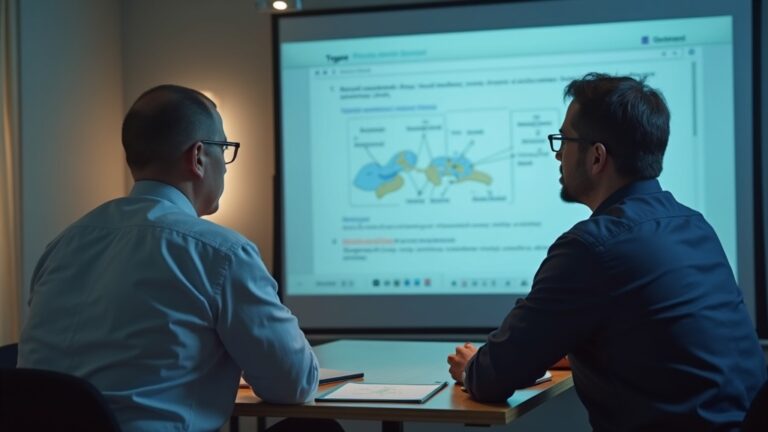
AI Machine Learning Training Applications
Discover how AI machine learning training optimizes mining and tunneling operations, enhancing grout mixer efficiency through predictive data models today.
Table of Contents
- Introduction
- The Role of Compute in AI Machine Learning Training
- Data Curation for Heavy Machinery
- Overcoming Bottlenecks in Frontier AI
- Market Growth and Industrial Applications
- Your Most Common Questions
- Comparing Training Approaches
- Practical Tips
- The Bottom Line
Article Snapshot
AI machine learning training is the process of feeding data into algorithms to teach systems how to make accurate predictions. In heavy industries like mining and tunneling, this process enables colloidal grout mixers to automate slurry proportions and predict mechanical failures before they occur.
Market Snapshot
- The amount of computation used to train notable AI models has grown on average by a factor of 4.5 per year since 2010 (Epoch AI, 2024)[6].
- The global AI training dataset market size is projected to grow from 3.9 billion USD in 2026 to 16.3 billion USD by 2033 (Grand View Research, 2025)[7].
- The AI training dataset market is expected to grow at a compound annual growth rate of 22.6 percent between 2026 and 2033 (Grand View Research, 2025)[7].
Introduction
AI machine learning training has fundamentally transformed how heavy industrial sectors approach equipment automation and operational safety. In mining and tunneling, the ability to process vast amounts of sensor data from colloidal grout mixers allows operators to optimize slurry viscosity and prevent costly downtime. As computational demands skyrocket, the methods used for machine learning model training have evolved from simple algorithmic tweaks to massive, data-centric operations.
This article explores how artificial intelligence training is applied to heavy machinery, the computational bottlenecks involved, and how data curation improves predictive maintenance for tunneling equipment. We will also examine the growing dataset market and compare different ML system training approaches used in industrial settings. By understanding these core concepts, engineering teams can better leverage training AI models to enhance the reliability of backfill and injection processes.
The Role of Compute in AI Machine Learning Training
The foundation of any robust industrial AI system relies heavily on the computational power available for processing complex equipment telemetry. When monitoring heavy machinery automation, processing vibration, pressure, and flow rate data from colloidal mixers in real-time requires deep learning architectures that demand massive hardware scaling. The physical infrastructure required to support these operations is expanding at an unprecedented rate.
According to Neil Thompson, Director of the FutureTech Research Project at MIT CSAIL, “Over the last decade, the compute used to train frontier AI systems has been growing roughly a factor of 4 every year, which is far faster than the traditional pace of Moore’s Law” (MIT Technology Review, 2024)[2]. This exponential growth in compute demands means that mining companies must invest heavily in cloud infrastructure to handle the sheer volume of operational efficiency data generated by their fleets.
Since 2010, the amount of computation used to train the largest AI systems has increased by a factor of 10 roughly every 2 years, far exceeding traditional hardware scaling trends (Our World in Data, 2024)[9]. For tunneling operations, this means that the neural networks analyzing grout mixing parameters are becoming increasingly complex, requiring specialized processors to maintain low-latency predictive maintenance alerts on the job site.
Data Curation for Heavy Machinery
High-quality sensor data is the most critical component when developing reliable predictive maintenance algorithms for tunneling equipment. Raw equipment telemetry collected from subterranean environments is often noisy, incomplete, or corrupted by extreme vibrations. Cleaning and structuring this information is essential before it can be fed into training AI models.
Sara Hooker, Head of Cohere For AI, notes that “As models get larger, the quality of the training data matters more than the quantity. Data curation has become a first‑class research problem for modern machine learning systems” (Stanford HAI, 2025)[4]. This shift toward data-centric AI is particularly relevant for mining equipment, where a single mislabeled pump cavitation event can lead to false operational alerts.
Andrew Ng, Founder of DeepLearning.AI, emphasizes that “For many machine learning projects today, data‑centric AI – systematically improving the data used to train models – is the most efficient way to boost performance” (ACL Anthology, 2024)[5]. By focusing on rigorous data curation, engineers ensure that the algorithms governing colloidal grout mixers can accurately distinguish between normal mechanical wear and critical seal failures. For a deeper look at the physical processes involved, refer to our comprehensive backfillgrouting guide to understand the baseline mechanical parameters that these sensors must track.
Overcoming Bottlenecks in Frontier AI
Scaling up artificial intelligence training for industrial applications faces significant physical and financial constraints that require innovative engineering solutions. The transition from experimental algorithms to deployed frontier AI models in heavy industry is hindered by the sheer cost of computational resources and the scarcity of highly specialized, labeled datasets.
Sam Altman, CEO of OpenAI, explains that “The cost of training leading AI models has grown from under a million dollars to tens or even hundreds of millions of dollars, making access to compute one of the central bottlenecks for frontier AI development” (OpenAI, 2024)[1]. For mining enterprises, balancing these escalating costs against the return on investment for reduced equipment downtime requires careful strategic planning and resource allocation.
Dario Amodei, CEO of Anthropic, adds that “The main constraint on training larger and more capable AI systems today is not new algorithmic breakthroughs, but getting enough high‑quality data and compute to scale up the training runs” (Financial Times, 2024)[3]. To navigate these constraints, industrial operators often rely on external research and global artificial intelligence computational trends to benchmark their infrastructure investments and optimize their ML system training pipelines for maximum efficiency.
Market Growth and Industrial Applications
The financial investment in AI algorithm training datasets is expanding rapidly, driven by the need for specialized industrial and educational models. As heavy industries digitize their operations, the demand for high-fidelity data to train predictive models has created a lucrative and fast-growing market sector.
The global AI training dataset market size is projected to grow from 3.9 billion USD in 2026 to 16.3 billion USD by 2033, reflecting rapidly increasing spending on data for AI and machine learning training (Grand View Research, 2025)[7]. Additionally, MarketsandMarkets estimates that the AI training dataset market will grow at a compound annual growth rate of 27.7 percent during its forecast period, reaching 9.58 billion USD by 2029 (MarketsandMarkets, 2024)[8].
This growth is also mirrored in the educational sector, where mining engineers learn to operate these advanced systems. In education, AI services are forecast to have the fastest growth, with a compound annual growth rate of 45.6 percent between 2023 and 2032 (AIPRM, 2024)[10]. Machine learning and deep learning technologies are expected to account for more than 66 percent of the overall global AI in education market by 2032 (AIPRM, 2024)[10]. Platforms offering specialized AI training networks provide the necessary curriculum for this workforce transition. You can view a sample page of our equipment specifications to see how telemetry outputs are structured for these educational datasets.
Your Most Common Questions
How does AI machine learning training improve grout mixer efficiency?
AI machine learning training improves grout mixer efficiency by analyzing real-time sensor data to optimize slurry mixing ratios and predict mechanical wear. By feeding historical operational data into neural networks, the system learns to identify subtle vibration patterns that indicate impending pump failures. This allows mining operators to schedule maintenance before a catastrophic breakdown occurs, significantly reducing downtime. Furthermore, deep learning algorithms can automatically adjust the mixer’s rotational speed and water-to-cement ratios based on the specific geological conditions of the tunnel, ensuring consistent grout quality and reducing material waste during complex backfilling operations.
What is the difference between data-centric and model-centric AI training?
Model-centric AI focuses on improving the architecture and algorithms of the neural network while keeping the dataset fixed. In contrast, data-centric AI systematically improves the quality, labeling, and curation of the data used to train the models. For industrial applications like tunneling equipment, data-centric approaches are often more effective because sensor data is inherently noisy and prone to environmental interference. By cleaning and refining the equipment telemetry data, engineers can achieve higher predictive accuracy without needing to design overly complex algorithms, making the overall machine learning model training process much more efficient and cost-effective.
Why is computational power a major bottleneck for frontier AI?
Computational power is a major bottleneck because the complexity of modern deep learning models requires processing billions of parameters simultaneously. As the demand for higher accuracy in predictive maintenance and automation grows, the physical hardware required to run these calculations struggles to keep pace with software advancements. The energy consumption and financial costs associated with running massive server farms for artificial intelligence training have skyrocketed. This hardware scaling limitation means that companies must carefully curate their datasets and optimize their code to ensure they are not wasting expensive compute resources on inefficient or poorly structured training runs.
How are AI training datasets used in mining education?
AI training datasets are used in mining education to create realistic simulations and virtual environments where engineers can practice operating heavy machinery without physical risks. These datasets include historical equipment telemetry, geological survey data, and operational logs from actual tunneling projects. By interacting with these ML system training models, students and new operators can learn how to respond to equipment anomalies, optimize slurry mixtures, and manage tunnel ventilation systems. This data-driven educational approach ensures that the next generation of mining professionals is fully prepared to manage the highly automated, sensor-rich environments of modern subterranean extraction sites.
Comparing Training Approaches
Selecting the right methodology for AI machine learning training depends heavily on the specific industrial application and available resources. Different approaches offer distinct advantages when processing heavy machinery telemetry and optimizing tunneling operations.
| Approach | Best Use Case | Primary Advantage |
|---|---|---|
| Supervised Learning | Predictive maintenance for grout mixers | High accuracy with labeled failure data |
| Unsupervised Learning | Anomaly detection in slurry flow rates | Identifies hidden patterns without labels |
| Reinforcement Learning | Automated mixer speed adjustments | Optimizes actions through trial and error |
| Transfer Learning | Adapting models to new tunneling sites | Reduces compute needs by reusing base models |
Practical Tips
Implementing effective AI algorithm training in heavy industry requires a strategic approach to both data collection and hardware deployment. First, always prioritize sensor calibration on your colloidal grout mixers; inaccurate baseline telemetry will fundamentally corrupt your neural networks and lead to faulty predictive outputs. Second, adopt a data-centric workflow where engineering teams spend more time cleaning and labeling equipment logs than tweaking algorithmic hyperparameters.
Third, leverage edge computing to process basic anomaly detection directly on the tunneling equipment, sending only critical data to the cloud for deeper deep learning analysis. This reduces bandwidth costs and latency in subterranean environments where connectivity is limited. Finally, ensure your operational staff receives adequate education on interpreting model outputs. The most sophisticated training AI models are useless if the on-site engineers do not trust or understand the predictive maintenance alerts. By combining rigorous data curation with practical edge deployment, mining operations can maximize the return on their computational investments.
For more about Ai training a comprehensive guide 2, see explore ai training a comprehensive guide 2 in depth.
The Bottom Line
AI machine learning training is no longer just a theoretical concept; it is a critical operational tool for modern mining and tunneling enterprises. By leveraging high-quality sensor data and robust computational resources, companies can dramatically improve the reliability and efficiency of their colloidal grout mixing equipment. As the dataset market continues to expand, staying ahead requires a commitment to continuous model refinement and rigorous data curation. To explore more about optimizing your subterranean operations and equipment deployment, read our detailed article on advanced backfill grouting techniques.
Further Reading
- OpenAI’s plan to make superintelligence safe. OpenAI.
https://openai.com/index/openai-announces-new-approach-to-frontier-model-safety/ - The compute behind artificial intelligence is hitting physical limits. MIT Technology Review.
https://www.technologyreview.com/2024/10/15/1103729/ai-compute-energy-environment-limits/ - Anthropic CEO on the race to scale frontier AI. Financial Times.
https://www.ft.com/content/4e4e5a6f-8f5f-4f4c-9a6b-0e7b7d5d9a20 - Why high‑quality data is the new frontier for AI. Stanford HAI.
https://hai.stanford.edu/news/high-quality-data-new-frontier-ai - Andrew Ng on the rise of data‑centric AI. ACL Anthology.
https://aclanthology.org/2024.ng-keynote.pdf - Trends in AI Compute. Epoch AI.
https://epoch.ai/trends - AI Training Dataset Market. Grand View Research.
https://www.grandviewresearch.com/industry-analysis/ai-training-dataset-market - AI Training Market Reports. MarketsandMarkets.
https://www.marketsandmarkets.com/Market-Reports/ai-training-1850.html - Artificial Intelligence. Our World in Data.
https://ourworldindata.org/artificial-intelligence - AI in Education Statistics. AIPRM.
https://www.aiprm.com/ai-in-education-statistics/