Ceramic Vacuum Disk Filter: Dewatering in Mining
A ceramic vacuum disk filter uses microporous ceramic membranes to dewater mining slurry, cutting energy use and producing clearer filtrate and a drier cake.
Table of Contents
- Introduction
- How a Ceramic Vacuum Disk Filter Separates Solids from Water
- Why Ceramic Vacuum Disk Filter Membranes Outperform Conventional Filter Cloth
- Ceramic Vacuum Disk Filter Applications in Mining and Tailings
- Selecting and Sizing a Ceramic Vacuum Disk Filter System
- Important Questions About Ceramic Vacuum Disk Filters
- Comparing Dewatering Options
- Practical Tips for Ceramic Vacuum Disk Filter Projects
- Key Takeaways
Article Snapshot
A ceramic vacuum disk filter is a solid-liquid separation device that draws slurry through microporous ceramic membranes under vacuum, forming a dry filter cake and a near solids-free filtrate that returns directly to the plant water circuit.
Introduction
A ceramic vacuum disk filter changes how a mine handles its water. Instead of forcing slurry through woven cloth, the unit draws liquid through a microporous ceramic membrane, leaving a dry cake on the surface and a filtrate clean enough to return straight to the process circuit. That single design choice reshapes tailings management, concentrate handling, and water balance across a plant.
This article explains how the technology works, why ceramic membranes outlast filter cloth, where the equipment fits in mining and mineral processing flowsheets, and what to verify before specifying a unit. It also compares ceramic filtration with the alternatives plant engineers usually weigh when a dewatering circuit is being designed or upgraded.
How a Ceramic Vacuum Disk Filter Separates Solids from Water
A ceramic vacuum disk filter separates solids from liquid in three continuous stages: cake formation, cake drying, and cake discharge. All three happen on the same rotating assembly, which is why the machine runs without the batch interruptions that define press-based dewatering.
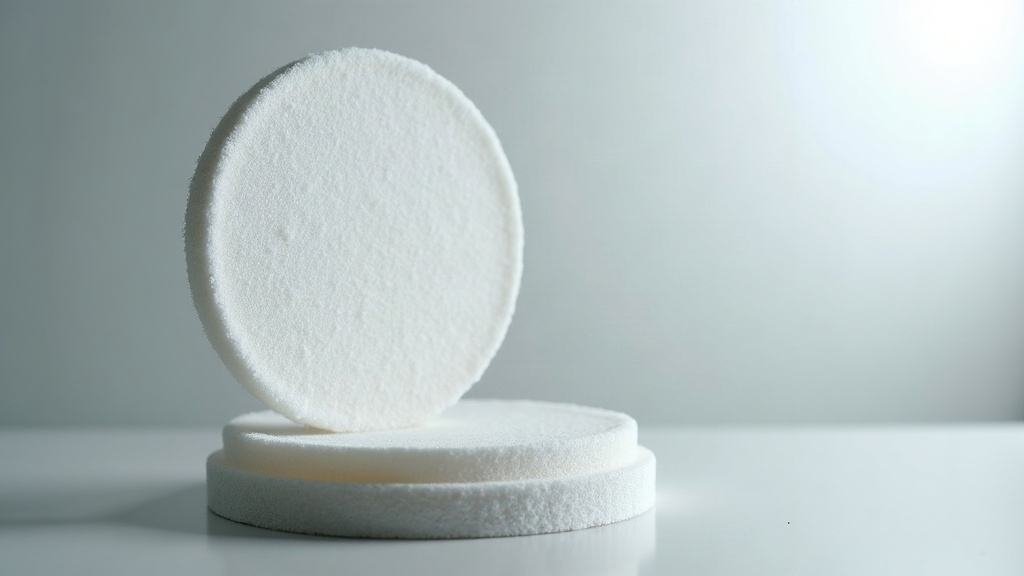
The core of the unit is a set of disc-shaped filter plates mounted on a hollow shaft. Each plate carries segments of microporous alumina ceramic. As the shaft turns, the segments pass through a basin of slurry. Vacuum applied from inside the plate draws liquid through the membrane while capillary forces hold solid particles on the outer surface. Because the pores are small, typically between 0.75 and 3.0 microns, fine and ultrafine particles that would slip through woven cloth are captured instead.
Filtrate collects inside the shaft and is drawn off continuously. It arrives at the vacuum receiver with suspended solids typically in the range of 50 to 200 ppm, clean enough to return to the process water circuit without further clarification in most plants. The cake that builds on the membrane surface is dried by air pulled through it during the remainder of the rotation, then lifted off by a scraper before the segment re-enters the slurry.
Between cycles the membrane is backwashed with water and, periodically, with acid. That backwash reverses flow through the pores and clears material lodged inside the ceramic. It is the step that keeps permeability stable over months of operation rather than days, and it is the main reason ceramic filtration holds throughput while cloth-based units lose capacity to blinding.
Why Ceramic Vacuum Disk Filter Membranes Outperform Conventional Filter Cloth
Ceramic membranes outperform conventional filter cloth because they resist abrasion, hold a fixed pore size, and tolerate chemical cleaning without degrading. Those three properties drive every operational advantage the technology offers.
Alumina ceramic is hard and abrasion-resistant. A filter membrane made from it can survive years of abrasive slurry contact without the fraying, stretching, and hole formation that shorten cloth life. A cloth that tears means an immediate drop in filtrate quality and an unplanned shutdown. A ceramic segment that wears simply keeps filtering until its scheduled replacement.
Pore size is fixed at manufacture. Cloth weaves vary slightly across a roll and stretch under vacuum, so the effective opening widens over time and fines report to the filtrate. Ceramic membranes hold their rated opening, which is why filtrate quality stays consistent from the first week to the last. Typical filtrate from a ceramic disc unit carries suspended solids around 50 to 200 ppm, while conventional vacuum filters commonly discharge filtrate above 10,000 ppm.
Ceramic membrane life reaches up to 24 months of continuous service, and the cleaning regime is aggressive by design: water backwash for routine recovery, acid wash for deeper regeneration. Cloth cannot take that treatment. The energy picture follows the same pattern. Ceramic disc filtration can consume up to 85% less energy than conventional vacuum filters, because the vacuum only has to pull air through a thin, stable cake rather than hold a vacuum against a saturated cloth.
Cake moisture lands 1.0 to 4.0% lower than conventional vacuum filters at similar throughput rates. For a concentrator shipping product, that difference shows up directly in freight and smelter terms.
Ceramic Vacuum Disk Filter Applications in Mining and Tailings
Ceramic vacuum disk filter applications cluster around four duties: tailings dewatering, concentrate filtration, paste backfill preparation, and industrial water treatment. Each one benefits from the same combination of dry cake and clean filtrate.
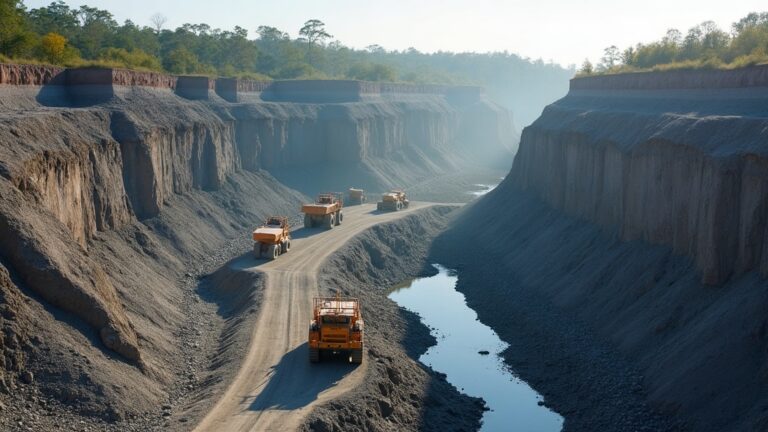
Tailings dry stacking is the largest growth area. Regulators and investors increasingly treat wet tailings storage as a risk to be reduced, and a filter that produces a stackable, low-moisture cake supports that shift. Because the filtrate returns to the plant with minimal suspended solids, the water balance improves at the same time. Freshwater intake falls, and the clarifier carries less fines loading.
Concentrate filtration is the second duty. Copper, zinc, lead, and iron concentrates all need moisture reduced before shipment, and the ceramic disc design handles the fine particle sizes that make cloth filtration difficult. Where specification calls for moisture below what filtration alone can reach, a dryer stage follows the filter to trim residual moisture to export or smelter requirements.
Paste backfill is the third. Drier cake requires less binder and less water in the mix, which lowers paste plant cost and improves the strength of the placed fill. Operations that already run cemented fill circuits recognise the value immediately: every percentage point of moisture removed upstream is binder that does not have to be purchased.
Industrial water treatment is the fourth. Sites that must remove fine particles before discharge or reuse can apply the same membrane technology outside the mining circuit, which makes the equipment relevant to municipal and industrial water managers as well as mine sites.
Selecting and Sizing a Ceramic Vacuum Disk Filter System
Selecting a ceramic vacuum disk filter system starts with testwork, not with a catalogue. Slurry behaviour varies too much between ore bodies for a sizing table alone to be reliable, and the cost of getting filtration area wrong is measured in lost throughput and rework.
What a Ceramic Vacuum Disk Filter Testwork Programme Should Prove
A proper programme answers four questions: what filtration rate the slurry will support, what cake moisture is achievable, what filtrate clarity the membrane delivers, and how the membrane responds to repeated backwash. Bench-scale testing establishes the first three. Pilot-plant work confirms them under continuous operation, including the cake discharge behaviour that only shows up after hours of running.
In-house testwork capability matters here. When the equipment supplier runs its own laboratory and pilot plant, the data feeding the sizing calculation comes from the same organisation that will build the machine, which removes the gap that opens when a third-party lab result is handed to a different designer. It also shortens the path from test result to flowsheet decision.
Filtration area then follows from the required tonnage and the tested rate. Modern ceramic disc units scale to 204 m2 of filtration area, which is enough capacity for large concentrator duties in a single machine frame. Modular design allows a plant to start with fewer discs and add capacity as throughput grows, which spreads capital spending across project phases instead of committing it all at commissioning.
Project delivery is the last variable. Equipment supply suits owners with in-house engineering. EPC and EPCM arrangements suit projects that need integration across disciplines. Build-own-operate-transfer structures suit owners who want the dewatering circuit delivered as a service. Matching the commercial model to the project structure is as important as matching the machine to the slurry.
Important Questions About Ceramic Vacuum Disk Filters
What is the difference between a ceramic vacuum disk filter and a conventional disc filter?
The difference is the filter medium. A conventional disc filter uses woven cloth; a ceramic unit uses microporous alumina segments. Cloth blinds, stretches, and tears, so filtrate quality drifts and maintenance is frequent. Ceramic membranes hold a fixed pore size, tolerate acid cleaning, and last up to 24 months. The practical result is steadier filtrate quality, typically 50 to 200 ppm suspended solids instead of more than 10,000 ppm, and far less unplanned downtime.
What cake moisture can a ceramic vacuum disk filter achieve?
Ceramic disc filtration typically delivers cake moisture 1.0 to 4.0% lower than conventional vacuum filters at similar throughput rates. The exact figure depends on particle size distribution, slurry density, and the vacuum applied, which is why bench and pilot testwork on the actual ore is the only reliable way to set a number for a specific project. Where export or smelter specifications demand still lower moisture, a dryer stage downstream of the filter closes the remaining gap.
How often do ceramic membranes need replacing?
Ceramic membrane lifespan reaches up to 24 months of sustained continuous filtration. Replacement is scheduled rather than reactive, because the membrane does not fail suddenly the way cloth does. Routine water backwash maintains permeability between scheduled acid washes, and the acid wash restores pore performance when fines accumulate. Because segments are replaced individually, a plant can rotate them through planned shutdowns instead of stopping the circuit for a full plate change.
Can a ceramic vacuum disk filter handle fine and ultrafine particles?
Yes. Membrane pore sizes range from 0.75 to 3.0 microns, which captures the fine and ultrafine fractions that pass through conventional cloth and end up in the filtrate. This is the property that makes the technology useful for tailings dewatering and concentrate filtration, where slimes and fine gangue are the main obstacle to clean water recovery. Solids-free filtrate reduces downstream fines loading and cuts clarifier workload, which in turn lowers the chemical demand of the water treatment circuit.
Comparing Dewatering Options
Dewatering equipment is chosen on three measures: how clean the filtrate is, how dry the cake is, and how much energy the duty consumes. Ceramic disc filtration leads on all three for fine-particle slurries, but it is not the only option a flowsheet engineer will consider.
| Technology | Typical filtrate solids | Cake moisture | Relative energy demand |
|---|---|---|---|
| Ceramic vacuum disk filter | 50-200 ppm | Lowest | Lowest, continuous |
| Conventional cloth vacuum disc filter | Above 10,000 ppm | Higher | Highest, continuous |
| Filter press | Low | Low | High, batch operation |
| Belt filter | Moderate | Moderate | Moderate, continuous |
Presses produce dry cake but run in batches and need operator attention between cycles. Belt filters handle high tonnage and washing duties well but leave more water in the cake and more fines in the filtrate. For fine slurries where water recovery and continuous operation both matter, ceramic disc filtration is usually the strongest fit.
Practical Tips for Ceramic Vacuum Disk Filter Projects
Good outcomes on ceramic filtration projects come from decisions made before the purchase order, not after commissioning. The following practices separate smooth installations from difficult ones.
- Test the actual ore, not a representative sample from a neighbouring deposit. Particle size distribution and clay content drive filtration rate more than head grade does.
- Size the vacuum system and the filtrate receiver together. A membrane that performs well in the lab can underperform if the vacuum pump cannot hold pressure across the full disc set.
- Plan the acid wash circuit at design stage. Retrofitting chemical dosing, neutralisation, and storage into a running plant is expensive and disruptive.
- Decide the water destination early. Filtrate returning to the process circuit, to a tailings pond, or to discharge each impose different quality requirements.
Two trends are shaping specifications. First, tailings dry stacking is moving from a nice-to-have to a permitting condition in several jurisdictions, which pushes filtration capacity earlier in project schedules. Second, artificial intelligence is entering project benchmarking, where a decade of operational and laboratory data can be used to predict performance for a new ore body before pilot work begins. Both trends favour equipment that produces measurable, repeatable results rather than equipment selected on capital cost alone.
Key Takeaways
A ceramic vacuum disk filter delivers three things conventional dewatering struggles to combine: clean filtrate, dry cake, and low energy demand in one continuous machine. For mines facing water scarcity, tightening tailings rules, or rising binder costs in paste backfill, that combination changes the economics of the whole circuit. The technology is mature and has been applied across a broad range of ore types.
The next step is testwork on your own slurry. Owners who want to see how the numbers look for their duty can review the CX-Series ceramic disc vacuum filtration technology and the pilot-plant programme behind it. For sites that also run cemented fill, the clsm backfill overview explains how drier cake translates into lower binder demand.
Useful Resources
- Ceramic Disc Filtration Technology. CEC Mining Systems Corp.
https://cecminingsystems.com/technologies/ceramic-disc-filtration/ - CLSM Backfill. Colloidal Grout Mixer.
https://www.colloidalgroutmixer.com/2026/06/27/clsm-backfill/