Backfill Grouting in Mining Guide: Equipment and Methods
Explore this backfill grouting in mining guide covering slurry mixing, injection techniques, and equipment for void filling and ground support in underground mining operations.
Table of Contents
- Key Techniques and Benefits
- Essential Equipment for Backfill Grouting
- The Backfill Grouting Process in Detail
- Best Practices and Safety Considerations
- Frequently Asked Questions
- Comparison of Backfill Grouting Methods
Key Takeaway
Backfill grouting in mining involves using slurry mixtures, typically fly ash and cement, injected under low pressure through boreholes to fill underground voids. This technique stabilizes ground, controls subsidence, and supports safe mining using specialized mixing and pumping equipment.
By the Numbers
- Remote hydraulic flushing and grouting from boreholes are among the two main placement methods for backfill material (CDC / NIOSH, 2026)[1]
- Grout backfill is commonly formulated as a fly ash-cement mixture to achieve required strength (CDC / NIOSH, 2026)[1]
- Grout is placed as discrete columns from mine floor to roof beneath the injection borehole (CDC / NIOSH, 2026)[1]
- A documented slurry backfill grouting process involves three distinct stages (PMC, 2018)[2]
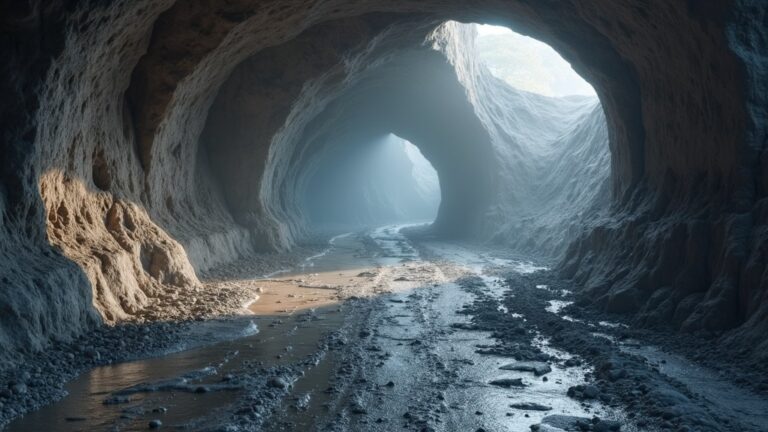
Backfill grouting in mining guide practices have become essential for modern underground operations. When mining activities leave behind voids, the surrounding rock mass can destabilize, leading to subsidence and safety hazards. Backfill grouting fills those voids with engineered slurries that harden and provide ground support. This guide covers the core techniques, equipment, and process steps used by mining engineers and contractors worldwide.
Key Techniques and Benefits
Backfill grouting relies on two main placement methods: hydraulic flushing and grouting from single or multiple boreholes. As noted by CDC authors in a 2026 NIOSH publication, “Hydraulic flushing and grouting, using remote methods from single or multiple boreholes, are the most often-used methods for the placement of backfill material.”[1] These methods allow operators to fill deep or inaccessible voids without entering hazardous areas. The grout itself is typically a fly ash-cement mixture, chosen for its cost-effectiveness and strength development. Adding cement increases the material’s strength, while fly ash improves flowability and reduces cost. The primary benefits of backfill grouting include improved ground stability, reduced surface subsidence, enhanced worker safety, and extended mine life. By filling voids promptly, operators can prevent catastrophic collapse and maintain the integrity of overlying strata.
Essential Equipment for Backfill Grouting
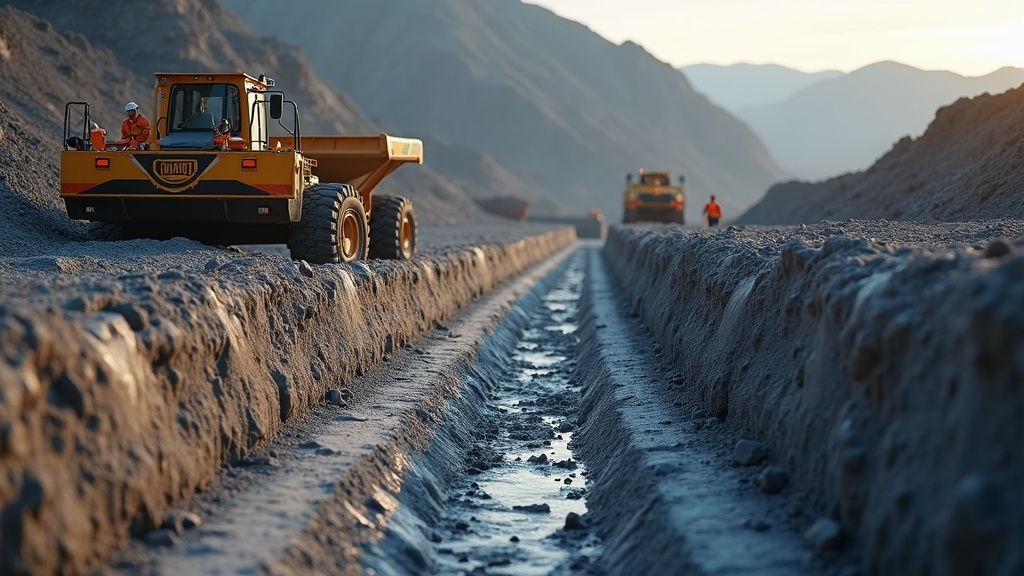
The success of a backfill grouting in mining guide project depends heavily on the equipment used. The core components include a grout mixer, agitator, pump, and injection system. Colloidal mixers are especially valued in mining and tunneling because they produce a homogeneous, stable slurry by shearing particles at high speed. After mixing, the grout is transferred to an agitated holding tank to prevent sedimentation before pumping. Positive displacement pumps, such as piston or progressive cavity types, deliver the slurry through pipelines to the borehole. At the injection point, operators regulate pressure and flow rate to control grout spread. A well-designed system ensures consistent mix quality and avoids blockages. For detailed mixing procedures and equipment specifications, consult a comprehensive grout mixing guide.
The Backfill Grouting Process in Detail
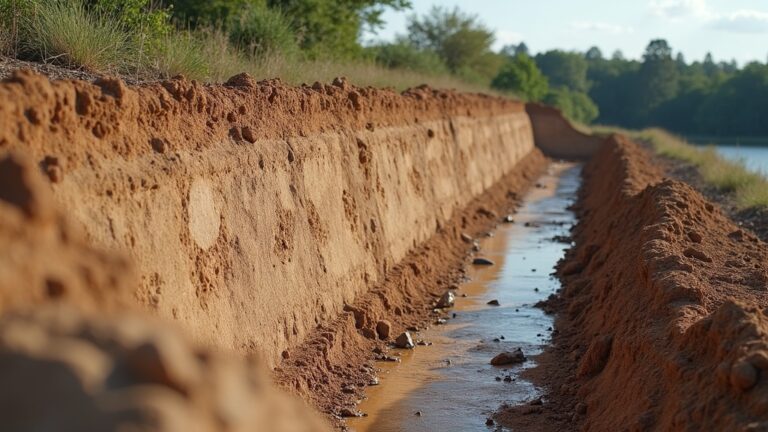
Backfill grouting typically follows a staged process to ensure complete void filling and ground control. In one documented example, a slurry backfill grouting process was divided into three stages (PMC, 2018)[2]. The first stage involves preparing the injection site by drilling boreholes from the surface or underground workings. In the second stage, grout is mixed to the desired consistency – commonly a water-to-fly-ash mass ratio of 8:10 (PMC, 2018)[2] – and pumped through a pipeline system equipped with 15 branch filling stop valves to distribute grout across the void. The process repeats as the mining face advances, with a typical working face mining increment of 10 meters before the next filling step (PMC, 2018)[2]. The third stage involves monitoring grout take and adjusting pressure to ensure complete void occupation without excessive loss. The U.S. Army Corps of Engineers recommends careful monitoring: “If significant losses occur, use multistage backfilling with an accelerator to minimize production impacts.”[3] Proper staging prevents voids from remaining unfilled and ensures the grout columns achieve the intended geometry from the mine floor to the roof.
Best Practices and Safety Considerations
Effective backfill grouting in mining guide projects require adherence to well-established best practices. First, pre-grout investigation using geophysical methods helps locate voids and estimate volumes. Second, optimizing the grout mix design for site-specific conditions – adjusting water-to-solid ratio, cement content, and additives – ensures both pumpability and final strength. Third, injection pressure must be carefully controlled. According to AUA Guidelines (2003)[4], backfill and contact grout injection pressure is commonly set at 1 to 3 bars above groundwater pressure, or 15 to 45 psi above in situ hydrostatic pressure. Exceeding these limits can fracture surrounding rock or cause grout to escape into unwanted areas. Fourth, quality control should include sampling and testing of grout cubes for unconfined compressive strength. Fifth, safety protocols must address slurry handling (cement and fly ash are alkaline and can cause burns), high-pressure lines, and working near boreholes. Finally, record keeping of grout volumes, pressures, and placement locations supports future mining planning. Tailings-based grout formulations, as reported in an IMWA experience paper (2009)[5], offer a sustainable alternative when suitable materials are available on-site.
Important Questions About Backfill Grouting in Mining Guide
What is the typical composition of backfill grout?
How is backfill grout injected into mine voids?
What equipment is essential for backfill grouting operations?
Why is backfill grouting important for ground control in mining?
Comparison of Backfill Grouting Methods
Different backfill grouting approaches are suited to various mine conditions. The table below compares three common methods based on key factors.
| Method | Grout Material | Placement Technique | Typical Application |
|---|---|---|---|
| Hydraulic Flushing and Grouting | Fly ash-cement slurry or cementitious blends | Remote injection from single or multiple boreholes | Abandoned or active mine voids, large cavities |
| Fly-Ash Slurry Grouting | Water, fly ash, sometimes cement (ratio 8:10) | Staged pipeline grouting with branch valves | Coal mine goaf areas, sequential filling behind advancing face |
| Tailings-Based Backfill Grouting | Processing tailings blended with binders | Pumped as thick slurry, often placed as whole backfill | Sites with on-site tailings, sustainable disposal plus void fill |
Practical Tips for Successful Backfill Grouting
To achieve consistent results in backfill grouting in mining guide projects, apply these actionable tips. First, conduct a thorough pre-grout survey using borehole cameras or geophysics to map void geometry. Second, test grout samples on-site for viscosity, setting time, and 28-day strength before full-scale injection. Third, maintain a steady injection pressure within the recommended 1–3 bar range above groundwater pressure and monitor for sudden drops that indicate grout loss. Fourth, use a colloidal mixer to ensure a homogeneous slurry that reduces pipeline blockages. Fifth, implement a multistage approach for large voids – place grout in lifts, allowing each to set before adding the next. Sixth, keep detailed logs of volumes, pressures, and material usage to inform future operations and regulatory compliance.
For more about Colloidalgroutmixer guide, see explore colloidalgroutmixer guide in depth.
Wrapping Up
Backfill grouting in mining guide practices are critical for safe and sustainable underground mining. By understanding the key techniques – hydraulic flushing, fly-ash slurry grouting, and tailings-based methods – and using proper mixing and injection equipment, operators can effectively fill voids, control subsidence, and support the overlying strata. The combination of remote placement, engineered grout formulations, and staged injection delivers reliable results. For further reading on equipment selection and process optimization, explore detailed resources on grout mixing and consider how colloidal technology can improve your next backfill project.
Useful Resources
- State-of-the-Art Techniques for Backfilling Abandoned Mine Voids. CDC / NIOSH, 2026.
https://stacks.cdc.gov/view/cdc/206318/cdc_206318_DS1.pdf - Use of fly-ash slurry in backfill grouting in coal mines. PMC, 2018.
https://pmc.ncbi.nlm.nih.gov/articles/PMC5727619/ - Department of the Army engineering manual. U.S. Army Corps of Engineers, 2000.
https://www.publications.usace.army.mil/portals/76/publications/engineermanuals/em_1110-2-3506.pdf - AUA Guidelines for Backfilling and Contact Grouting of Tunnels, 2003.
https://www.scribd.com/document/465751326/aua-guidelines-for-backfilling-and-contact-grouting-of-tunnels-a-2003-pdf - Experience with backfilling of mine voids. IMWA, 2009.
https://www.imwa.info/docs/imwa_2009/IMWA2009_SpychakExperience.pdf