The Ultimate colloidalgroutplants guide
This colloidalgroutplants guide helps select high-shear mixers, check flow rates, and optimize cement-based grout for heavy construction and tunneling work.
Table of Contents
- The Mechanics of High-Shear Mixing
- Critical Selection Parameters for Grouting Equipment
- Plant Configurations and Series Types
- Operational Best Practices on the Job Site
- Questions from Our Readers
- Comparing Grouting Approaches
- Practical Tips for Field Applications
- Key Takeaways
Quick Summary

The colloidalgroutplants guide is a comprehensive framework for selecting and operating high-shear mixing equipment. It outlines the critical parameters for producing stable, fully dispersed cement-based grout used in heavy construction, tunneling, and mining applications.
Market Snapshot
- Equipment selection typically follows a 5-step process (ChemGrout, 2018)[1].
- Plunger pumps for high-pressure applications offer a range of 12-32 GPM (ChemGrout, 2024)[2].
- Demanding grout applications require pressure ratings between 1000-2000 PSI (ChemGrout, 2024)[2].
- Equipment lineups generally feature 3 series types, including colloidal, thick-mix, and thin-mix (ChemGrout, 2018)[1].
Introduction to Grouting Systems
The colloidalgroutplants guide provides essential insights for engineers and contractors navigating the complexities of modern grouting operations. When undertaking heavy construction projects, the quality of your cement-based grout directly impacts structural integrity and long-term durability. High-shear mixing technology has revolutionized how we approach subsurface stabilization, ensuring that every batch meets rigorous engineering standards. This article explores the fundamental principles of high-shear colloidal mixing, examining the mechanical forces that create uniform grout mixes. We will discuss the critical selection criteria for grouting equipment, including flow rate and pressure requirements. Furthermore, we will compare different plant configurations and provide practical tips for optimizing mixing efficiency on the job site. Whether you are working on deep foundations or extensive tunneling networks, understanding these systems is vital for project success.
The Mechanics of High-Shear Mixing
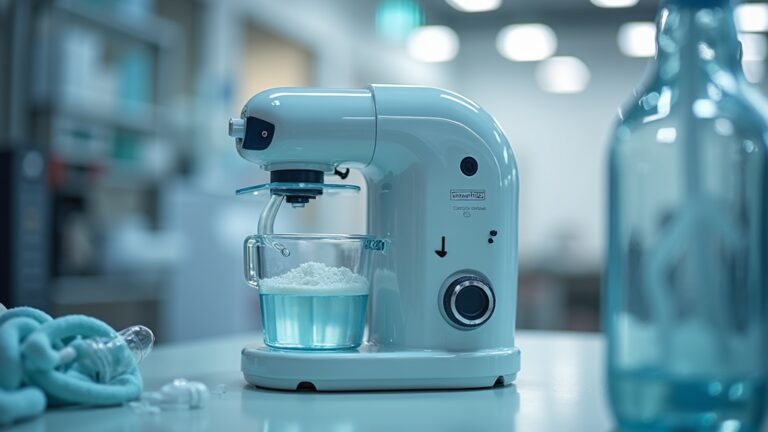
High-shear colloidal mixers rely on intense mechanical forces to produce fully dispersed and stable grout. Unlike standard paddle mixers that merely fold ingredients together, a high-shear mixer utilizes a specialized rotor-stator design. This configuration generates immense centrifugal force, driving the cement and water mixture through narrow tolerances at high velocities. The resulting vortex action and high-speed shearing effectively break down cement agglomerates, ensuring complete and rapid hydration of every particle.
According to Penndrill Manufacturing, “Our high shear colloidal mixer ensures the most stable, uniform grout mix with cutting-edge vortex action and high-speed shearing” (Penndrill Manufacturing, 2025)[3]. This mechanical advantage is crucial when working with low water-to-cement ratios, which are often required for high-strength structural applications. By eliminating unmixed clumps, the equipment prevents weak points in the final cured material.
The resulting dispersed grout exhibits significantly lower bleed rates and reduced segregation during the pumping phase. This stability is particularly important in deep vertical shafts or overhead tunneling applications where gravity naturally pulls heavier particles downward. A well-dispersed mixture maintains its homogeneity from the mixing tank all the way to the injection point. For engineers reviewing a colloidalgroutplants guide, understanding these fluid dynamics is the first step toward specifying the correct machinery for demanding geological conditions.
Critical Selection Parameters for Grouting Equipment
Selecting the right equipment requires a careful evaluation of specific project parameters and operational demands. The foundation of any reliable setup hinges on matching the pump capacity to the geological conditions and the required injection volume. When consulting a colloidalgroutplants guide, engineers must prioritize two primary parameters: maximum flow rate and grouting pressure (ChemGrout, 2018)[1].
As ChemGrout advises, “Determine the maximum flow rate (GPM) and grouting pressure requirements” before finalizing any equipment purchase (ChemGrout, 2018)[1]. Flow rate dictates how quickly the void space can be filled, which is critical when working with fast-setting chemical additives or in areas with high groundwater infiltration. Conversely, grouting pressure determines the equipment’s ability to penetrate dense soil matrices or seal micro-fractures in bedrock.
For high-pressure applications, plunger pumps are the industry standard. These positive displacement pumps can sustain continuous operation without the cavitation issues that plague centrifugal alternatives. Modern setups often feature robust plunger pumps capable of delivering 12-32 GPM at pressures ranging from 1000-2000 PSI (ChemGrout, 2024)[2]. Evaluating these metrics ensures that the selected machinery will not stall or fail when encountering unexpected subsurface resistance, thereby maintaining the structural integrity of the injection process.
Plant Configurations and Series Types
Grouting equipment manufacturers offer diverse plant configurations to address the varying viscosity and mobility needs of different construction environments. A comprehensive colloidalgroutplants guide will typically categorize equipment into three distinct series types: colloidal, thick-mix, and thin-mix configurations (ChemGrout, 2018)[1]. Each configuration serves a specific purpose based on the rheology of the intended grout mixture.
Thick-mix plants are designed for high-solids, low-mobility grouts often used in bulk void filling or dam core stabilization. These systems utilize heavy-duty agitators to keep dense materials suspended. On the other end of the spectrum, thin-mix plants are optimized for high-penetration applications involving micro-fine cements or chemical solutions that require minimal shear but high flow velocities.
Colloidal plants sit in the middle, offering the optimal balance of intense shear and steady throughput for standard cement-based grout. As noted in federal highway grouting guidelines published by the bureau of reclamation concrete guidelines, proper material dispersion is vital for long-term structural performance in infrastructure projects. By selecting the correct grout plant series, contractors can avoid the costly mistakes of under-mixing thick slurries or over-shearing delicate chemical blends. Understanding these distinctions is a core component of any effective colloidalgroutplants guide.
Operational Best Practices on the Job Site
Maintaining consistent grout quality on the job site demands strict adherence to operational protocols and routine equipment maintenance. The high-shear mixer is only the first stage of the process; once the grout is mixed, it must be immediately transferred to an agitator tank. This secondary tank keeps the mixture in constant motion, preventing the cement particles from settling while the plunger pump draws the material for injection.
Operators must continuously monitor the water-to-cement ratio using a mud balance or flow meter to ensure batch consistency. Variations in water content can drastically alter the set time and final compressive strength of the grout. Furthermore, the pump hopper must be kept full to prevent air entrainment, which can cause pump cavitation and lead to dangerous pressure spikes in the injection lines.
Routine maintenance is equally critical. Plunger pumps require daily inspection of their packing seals and valves to prevent abrasive cement particles from causing premature wear. Contractors looking to stay updated on maintenance schedules and field innovations can review recent industry project updates for the latest operational case studies. By combining rigorous quality control with proactive equipment care, teams can maximize mixing efficiency and ensure a flawless injection process from start to finish.
Questions from Our Readers
What is the main advantage of a high-shear colloidal mixer over a standard paddle mixer?
The primary advantage lies in the mechanical dispersion of cement particles. Standard paddle mixers rely on low-speed folding, which often leaves microscopic agglomerates of dry cement unhydrated. A high-shear colloidal mixer utilizes intense vortex action and high-speed shearing to completely break apart these clumps. This results in a fully dispersed, stable grout mix that exhibits higher compressive strength, lower bleed rates, and superior penetration into fine soil fractures compared to conventionally mixed slurries.
How do I determine the correct flow rate for my grouting project?
Determining the correct flow rate requires analyzing the volume of the void space, the permeability of the surrounding geology, and the set time of the grout mixture. High-permeability soils or large open voids may require higher flow rates to fill the space before the grout begins to set. Conversely, low-permeability rock or micro-fracture sealing requires lower flow rates to prevent excessive pressure buildup. Engineers typically calculate the required gallons per minute (GPM) based on the desired injection radius and the specific rheological properties of the cement-based grout being used.
Can colloidal grout plants handle micro-fine cement blends?
Yes, colloidal grout plants are exceptionally well-suited for micro-fine cement blends. Micro-fine cements have a much smaller particle size than standard Portland cement, which makes them prone to clumping and flocculation when introduced to water. The intense shear forces generated by the colloidal mixer effectively separate these ultra-fine particles, ensuring a uniform grout mix. This complete dispersion is critical for micro-fine cements, as their primary purpose is to penetrate extremely tight soil pores and hairline rock fractures that standard grouts cannot access.
What maintenance is required for the plunger pumps on a grout plant?
Plunger pumps require rigorous daily maintenance due to the highly abrasive nature of cement-based grout. Operators must inspect and adjust the packing seals regularly to prevent slurry leakage and maintain pressure integrity. The suction and discharge valves should be checked for wear or blockages caused by hardened grout particles. Additionally, the fluid ends of the pump must be flushed with clean water immediately after operations cease to prevent internal solidification. Proper lubrication of the power end and routine oil changes are also essential to ensure long-term reliability under high-pressure conditions.
Comparing Grouting Approaches
Selecting the optimal mixing and delivery approach is critical for project efficiency. The colloidalgroutplants guide highlights that different geological conditions demand specific equipment configurations to achieve the desired subsurface stabilization. Below is a comparison of the three primary mixing approaches used in modern construction.
| Approach | Shear Level | Best Application |
|---|---|---|
| High-Shear Colloidal | High | Foundations, tunneling, and anchors requiring stable, low-bleed grout. |
| Standard Paddle Mixing | Low | Bulk void filling where high strength and deep penetration are not critical. |
| Continuous Thin-Mix | Medium | High-volume chemical grouting or micro-fine cement injection in permeable soils. |
Practical Tips for Field Applications
Optimizing your grouting operations requires a blend of technical knowledge and practical field experience. Implementing the following best practices will help maintain equipment longevity and ensure consistent grout quality throughout the project lifecycle.
- Pre-hydrate Bentonite: If your mix design includes bentonite, pre-hydrate it in a separate tank before adding it to the colloidal mixer. This prevents the clay from wrapping around the mixer shaft and ensures proper viscosity development.
- Monitor Ambient Temperatures: Extreme heat accelerates the hydration process, while cold delays it. Adjust your water temperature or use retarders/accelerators to maintain a consistent set time regardless of weather conditions.
- Use a Mud Balance: Test the density of every batch using a mud balance before it enters the agitator tank. This simple tool verifies the water-to-cement ratio and catches batching errors before the grout is pumped underground.
- Flush Lines Promptly: Never allow grout to sit in the delivery lines or pump hopper during extended breaks. Flush the entire system with clean water to prevent catastrophic blockages.
By integrating these strategies, contractors can significantly reduce downtime and improve the overall reliability of their operations, as outlined in this colloidalgroutplants guide.
Key Takeaways
Mastering the principles outlined in this colloidalgroutplants guide is essential for delivering successful subsurface stabilization projects. From understanding the mechanical advantages of high-shear mixing to calculating precise flow rates and pressure requirements, every detail impacts the final structural integrity. Selecting the right plant configuration and adhering to strict operational protocols ensures that your cement-based grout performs exactly as engineered. For more in-depth technical resources, equipment specifications, and industry insights, continue to explore the comprehensive articles and guides available on colloidalgroutmixer.com.
Sources & Citations
- ChemGrout Grouting Equipment Overview. ChemGrout.
https://www.scribd.com/document/530326729/ChemGrout-All-Line-2018-1 - Widest Selection of Grouting Equipment in the World. ChemGrout.
https://kale-tuna-prpg.squarespace.com/s/Complete-Line_web.pdf - What is High Shear Colloidal Mixer Technology? Penndrill Manufacturing.
https://penndrill.com/what-is-high-shear-colloidal-mixer-technology/
For more about Colloidalgroutplants guide, see Colloidalgroutplants Guide.