
The Complete Colloidalmixers Guide for Construction
Read our complete colloidalmixers guide for construction. Learn about high shear mixing, grout slurry stability, and equipment specs for civil projects.
Table of Contents
- Introduction
- Core Principles of High Shear Mixing
- Applications in Civil and Ground Engineering
- Equipment Specifications and Batch Capacity
- Optimizing Grout Slurry Performance
- Important Questions About the Colloidalmixers Guide
- Comparing Mixing Technologies
- Practical Tips
Article Snapshot
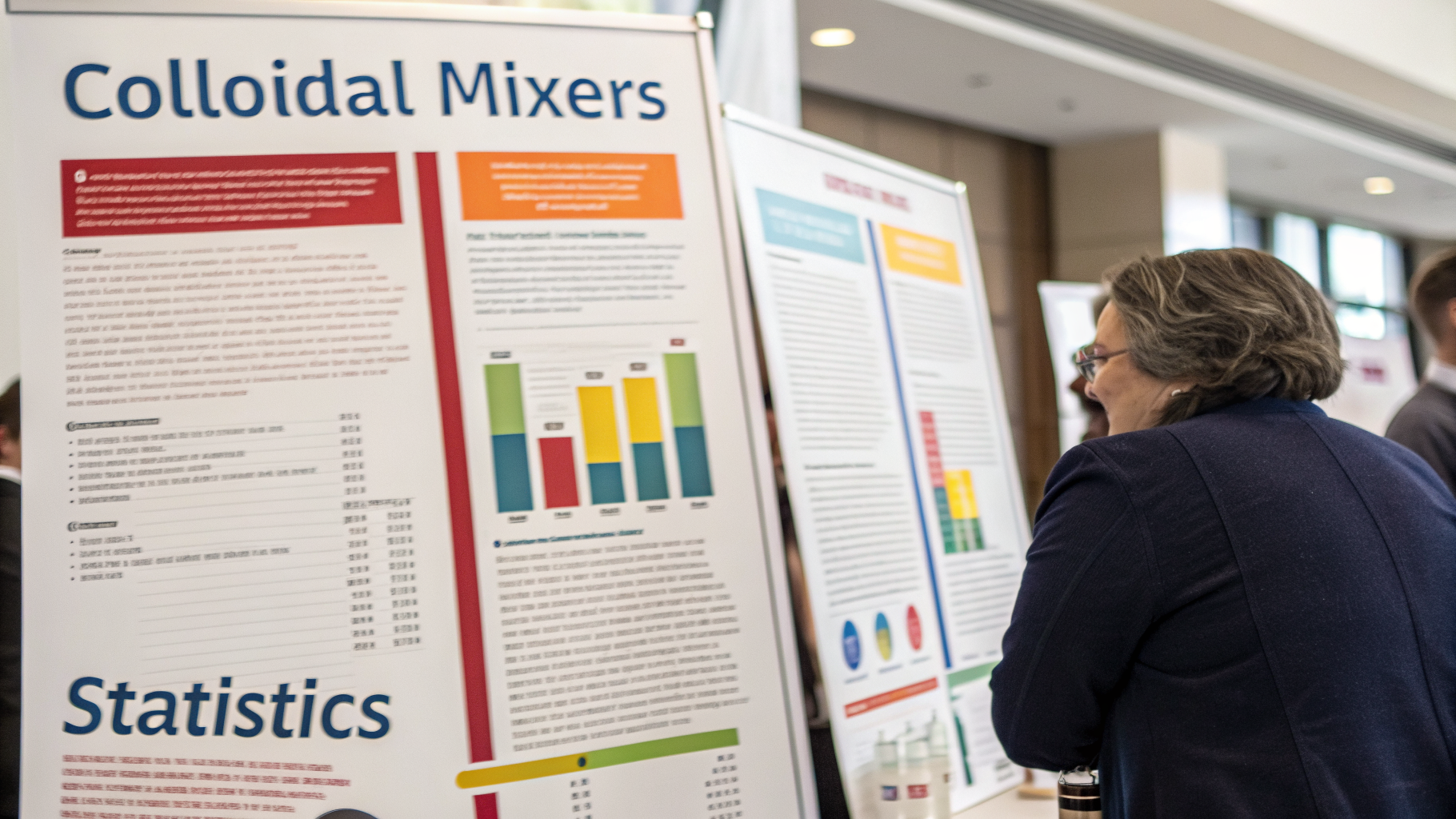
This colloidalmixers guide is a comprehensive framework detailing the operation, specifications, and applications of high shear mixing equipment in construction. It covers how intense vortex action and rotor speed create homogeneous grout, ensuring bleed resistance and optimal hydration for demanding civil engineering and ground engineering projects.
Market Snapshot
- High shear mixing increases slurry fluidity by 20 percent compared to paddle mixers (ChemGrout Inc., 2020)[1].
- Modern rotors operate at 2000-3000 revolutions per minute to generate required shear forces (PennDrill Manufacturing, 2024)[2].
- Intense vortex action reduces mix time to 2-3 minutes per batch (AMIX Systems, 2025)[3].
Introduction
This colloidalmixers guide provides essential insights into the machinery that revolutionizes modern construction and ground stabilization. When dealing with complex cementitious materials, achieving a stable, homogeneous grout is critical for structural integrity. Traditional paddle mixers often fall short, leaving cement particles partially hydrated and prone to segregation. This is where high shear mixing technology becomes indispensable. By utilizing intense vortex action and rapid rotor speed, these machines break down bentonite clay and cement into a fine, uniform suspension. Professionals often consult specialized platforms like colloidalmixers.com to compare modern models and technical specifications. In this article, we will explore the core principles behind this technology, examine its vital applications in dam grouting and mining cemented rockfill, review key equipment specifications like batch capacity, and discuss how to optimize grout slurry performance. Whether you are specifying equipment for post-tensioning or road maintenance, understanding these systems ensures your project achieves maximum durability and bleed resistance.
Core Principles of High Shear Mixing
The fundamental advantage of a colloidal mixer lies in its ability to completely hydrate and disperse fine particles through extreme mechanical force. Unlike conventional agitation methods that simply fold ingredients together, high shear mixing subjects the grout slurry to intense hydraulic and mechanical stresses. This process typically involves a rotor and stator arrangement where the rotor spins at high velocities, drawing the mixture into the center and expelling it outward through narrow gaps.
As the Colcrete Ltd Engineering Team explains, “The Colcrete mixer utilizes a true colloidal mill that shears the cement particles, ensuring that the cement is completely mixed and fully hydrated, producing a stable, homogeneous grout that resists bleed and segregation” (Colcrete Ltd, 2024)[4]. This shearing action is what transforms a basic mixture of water and cement into a highly stable colloidal suspension. The rapid rotation, often exceeding thousands of revolutions per minute, creates a powerful vortex that prevents heavier particles from settling.
This level of mechanical intervention is particularly crucial when working with low water-to-cement ratios. In such mix designs, the natural fluidity of the slurry is minimal, making it difficult for standard mixers to achieve uniformity. The high shear forces effectively increase the apparent fluidity without adding excess water, which would otherwise compromise the final compressive strength. By ensuring every cement particle is individually wetted and separated, the resulting grout exhibits superior flow characteristics and long-term stability, forming the bedrock of reliable ground engineering solutions.
Applications in Civil and Ground Engineering
The practical applications detailed in any comprehensive colloidalmixers guide span a wide array of heavy civil and geotechnical projects, often guided by standards from the Geo-Institute of the American Society of Civil Engineers. One of the most demanding environments for this equipment is dam grouting and rock grouting, where structural waterproofing and foundation stabilization are paramount. In these scenarios, the grout must penetrate deep into microscopic rock fissures without separating or bleeding water back to the surface. The exceptional stability provided by high shear mixing ensures the slurry remains uniform even under high pumping pressures.
Beyond dam construction, these systems are heavily utilized in mining cemented rockfill operations. Backfill stability is critical for underground safety, and the equipment’s ability to produce mixes with extremely low bleed levels prevents voids and weak zones in the cured fill. Similarly, in post-tensioning applications for bridges and high-rise buildings, the grout must completely encapsulate steel tendons to prevent corrosion. A guide for colloidal mixers will always highlight the importance of complete tendon encapsulation, which is only achievable with a highly fluid, non-segregating slurry.
Road maintenance and utility trenching also benefit from this technology. When stabilizing subgrades or filling abandoned pipelines, contractors require a mix that flows easily into irregular cavities and sets with predictable strength. The use of bentonite clay alongside cement is common in these trenchless applications, and the intense shearing action is necessary to fully hydrate the clay platelets. This comprehensive utility makes the machinery a staple across diverse construction sectors, proving its value in both massive infrastructure projects and localized repair works.
Equipment Specifications and Batch Capacity
Selecting the right machinery requires a careful review of equipment specifications, as outlined in a detailed colloidalmixers guide. The physical dimensions, mixing tank capacity, and agitation tank configurations dictate the overall production rate on a job site. For large-scale civil projects, continuous operation is essential. Commercial systems often feature a primary high shear mixing tank paired with a secondary agitation tank, allowing one batch to be mixed while the previous batch is being pumped.
Batch sizes vary significantly based on the project scale. Smaller units designed for localized ground engineering might feature a mixing tank capacity of around 170 gallons, while larger industrial models handle much greater volumes. The output rates are equally impressive, with some heavy-duty models capable of processing up to 2000 kilograms of cement per hour. This high throughput is vital for tunnelling operations where continuous grouting is required to support the tunnel boring machine and stabilize the surrounding earth.
Pump pairing is another critical specification. The mixing unit must be matched with a positive displacement pump, such as a progressive cavity or plunger pump, capable of handling the dense, abrasive nature of the grout slurry. Furthermore, the power source – whether electric, diesel, or hydraulic – must be selected based on site constraints. Electric models are preferred for underground mining and enclosed spaces due to zero emissions, while diesel-powered skid units offer the mobility needed for remote dam grouting sites. Understanding these specifications ensures contractors deploy the most efficient setup for their specific mix design and logistical requirements.
Optimizing Grout Slurry Performance
Achieving peak performance from your equipment relies heavily on optimizing the grout slurry formulation and operational parameters. A well-structured colloidal mixer operational protocol emphasizes the sequence of ingredient addition. Typically, water is introduced first, followed by any liquid admixtures, then bentonite clay or other fine suspensions, and finally the cement. This sequential loading prevents the formation of dry clumps and ensures the high shear forces can act on fully wetted materials.
The PennDrill Manufacturing Team notes, “Our high shear colloidal mixer ensures the most stable, uniform grout mix by combining cutting‑edge vortex action with high‑speed shearing, which breaks down cementitious particles and bentonite clays into a very fine suspension” (PennDrill Manufacturing, 2024)[2]. Maintaining the correct rotor speed is vital to sustaining this vortex. If the speed drops, the shearing action diminishes, leading to incomplete hydration and potential segregation in the agitation tank.
Temperature control also plays a role in slurry optimization. In hot climates, the intense friction generated by high shear mixing can rapidly increase the slurry temperature, accelerating the setting time and reducing pumpability. Contractors often use chilled water or ice flakes in the mix design to counteract this thermal gain. Conversely, in freezing conditions, heated water ensures the cement hydrates properly. Regular maintenance of the rotor and stator components is equally important, as wear in these high-tolerance parts directly reduces the shearing efficiency. By closely monitoring these operational variables, site engineers can consistently produce high-performance grout that meets stringent structural specifications.
Important Questions About the Colloidalmixers Guide
What is the main difference between a colloidal mixer and a paddle mixer?
The primary difference lies in the mixing mechanism and the resulting slurry quality. Paddle mixers rely on simple agitation and folding, which is sufficient for basic concrete but inadequate for fine grout slurries. In contrast, high shear mixing equipment utilizes a high-speed rotor and stator to subject the mixture to intense mechanical and hydraulic forces. This shearing action completely breaks down cement particles and bentonite clay, ensuring full hydration and creating a highly stable, homogeneous grout that resists water bleed and particle segregation, which paddle mixers cannot achieve.
How does high shear mixing improve the pumpability of grout?
High shear mixing significantly improves pumpability by increasing the apparent fluidity of the grout slurry without requiring additional water. The intense shearing forces separate and fully wet each individual cement particle, reducing internal friction within the mixture. This enhanced fluidity allows the grout to flow more easily through narrow hoses and penetrate deep into microscopic rock fissures during dam grouting or post-tensioning applications. Consequently, contractors can use denser, stronger mix designs with lower water-to-cement ratios while still maintaining the necessary flow characteristics for efficient pumping and placement.
What types of materials can be processed in these mixing systems?
These systems are highly versatile and can process a variety of fine, cementitious, and clay-based materials. The most common materials include Portland cement, micro-fine cements, and bentonite clay, which are foundational for ground engineering and drilling fluids. They also effectively handle fly ash, silica fume, and various chemical admixtures used to modify setting times or enhance strength. The intense vortex action ensures that even highly cohesive materials like bentonite, which tend to clump in standard mixers, are fully hydrated and dispersed into a smooth, uniform suspension suitable for demanding civil construction applications.
Why is bleed resistance critical in post-tensioning grout applications?
Bleed resistance is absolutely critical in post-tensioning because any water that separates from the grout slurry can create voids and leave the steel tendons exposed to moisture and air. If the grout bleeds, the water rises to the high points of the tendon ducts, leaving the steel unprotected and highly susceptible to corrosion. This corrosion can compromise the structural integrity of bridges and buildings. High shear mixing ensures the grout remains a stable, homogeneous suspension with virtually zero bleed, guaranteeing complete encapsulation of the tendons and ensuring the long-term durability of the structure.
Comparing Mixing Technologies
Choosing the right equipment depends on the specific requirements of the grout slurry and the project scale. While standard agitation works for basic fills, demanding structural applications require advanced shearing capabilities. The table below contrasts different mixing approaches to highlight where high shear technology excels.
| Mixing Approach | Mechanism | Best Application | Bleed Resistance |
|---|---|---|---|
| Paddle Mixing | Low-speed folding and agitation | Standard concrete and basic mortar | Low |
| High Shear Colloidal Mixing | High-speed rotor/stator shearing | Dam grouting, post-tensioning, mining cemented rockfill | Very High |
| Vortex Jet Mixing | Fluid recirculation via nozzle jets | Large-volume slurry walls and drilling fluids | Moderate |
Practical Tips for Equipment Operation
To maximize the lifespan and efficiency of your machinery, implement a rigorous maintenance and operational routine. First, always inspect the rotor and stator for wear before starting a shift; even minor degradation in these high-tolerance parts significantly reduces shearing efficiency and slurry stability. Second, adhere strictly to the correct loading sequence – water first, then admixtures, followed by clays, and finally cement – to prevent dry clumping and motor overload.
For those looking to deepen their understanding of equipment setup, reviewing a hello world introduction post can provide foundational insights into site preparation. Additionally, monitoring the slurry temperature is crucial, especially in extreme climates, as excessive heat accelerates curing and hampers pumpability. Always pair your mixer with the correct positive displacement pump to handle the dense, abrasive nature of the grout. Finally, explore our uncategorized grout mixer articles for ongoing updates on maintenance schedules and advanced mix design strategies to keep your operations running smoothly.
Final Thoughts on the Colloidalmixers Guide
Mastering the principles outlined in this colloidalmixers guide is essential for delivering durable, high-performance infrastructure. From achieving superior bleed resistance in post-tensioning to ensuring structural stability in mining backfill, the right high shear mixing technology transforms project outcomes. By understanding equipment specifications, optimizing slurry formulations, and maintaining rigorous operational standards, contractors can confidently tackle the most demanding ground engineering challenges. For more in-depth technical resources and equipment reviews, continue exploring the expert insights available on colloidalgroutmixer.com.
Sources & Citations
- Colloidal Grouting Equipment – Product Bulletin. ChemGrout Inc.
https://www.chemgrout.com/wp-content/uploads/2020/03/ChemGrout-Colloidal.pdf - What is High Shear Colloidal Mixer Technology? PennDrill Manufacturing.
https://penndrill.com/what-is-high-shear-colloidal-mixer-technology/ - Colloidal Mixer Technology for Construction Projects. AMIX Systems.
https://amixsystems.com/colloidal-mixer/ - Mixing & Pumping Equipment – Colloidal Grout Mixers. Colcrete Ltd.
https://colcreteltd.com/products/
For more about Colloidalmixers guide, see Colloidalmixers Guide.