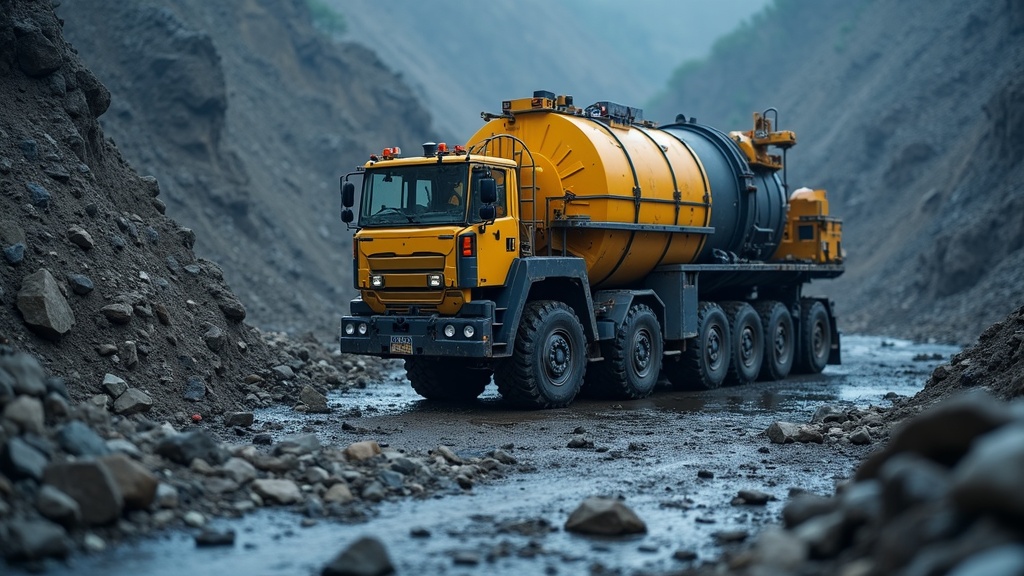
Professional Colloidal Grout Mixing Equipment in Mining: Key Insights
Professional colloidal grout mixing equipment in mining has become essential for achieving stable, high-quality cement suspensions in underground operations. This article examines the technology, its performance benefits, operational considerations, and future trends for mining and tunneling professionals.
Table of Contents
- Quick Summary
- Professional Colloidal Grout Mixing Equipment in Mining: By the Numbers
- Introduction
- What Makes Colloidal Grout Mixing Different
- Performance Gains in Underground Operations
- Selecting and Integrating Equipment
- Future Trends and Automation
- Important Questions About Professional Colloidal Grout Mixing Equipment in Mining
- Comparison of Grout Mixing Approaches for Mining
- Practical Tips for Implementation
- Key Takeaways
- Useful Resources
Quick Summary: Professional colloidal grout mixing equipment in mining is a high-shear mixing technology that produces stable, low-bleed cement suspensions for underground ground support and water control. It outperforms conventional paddle and turbine mixers in grout quality, penetration, and operational efficiency, making it the modern standard for mining and tunneling projects.
Professional Colloidal Grout Mixing Equipment in Mining: By the Numbers
- High-shear colloidal mixers can reduce grout bleed water by up to 70 percent compared with conventional paddle mixers (Journal of Rock Mechanics and Geotechnical Engineering, 2024)[1].
- In a field trial across three underground mines, the use of professional colloidal grout mixing plants reduced average grout pump line blockages by 55 percent (CIM, 2025)[2].
- Modern containerized colloidal grout plants can deliver continuous outputs of up to 20 cubic metres of grout per hour (AMIX Systems Ltd., 2026)[3].
Introduction
In modern underground mining, controlling groundwater inflow and stabilizing fractured rock masses are critical to safety and productivity. Professional colloidal grout mixing equipment in mining addresses these challenges by producing a finely dispersed, stable cement suspension that can be injected over long distances into rock formations. Unlike conventional paddle or turbine mixers, colloidal mixers use a high-speed rotor-stator mechanism to shear cement particles apart, creating a homogeneous grout with minimal bleed water and high early strength. This article provides a detailed look at the technology, its measurable benefits, how to select the right equipment, and what the future holds for automated grouting systems in mining and tunneling.
What Makes Colloidal Grout Mixing Different
The core distinction of colloidal mixing lies in its ability to apply intense mechanical shear to the cement-water mixture. In a colloidal mixer, the slurry passes through a narrow gap between a rapidly spinning rotor and a stationary stator, generating high shear rates that break up cement agglomerates. This process produces a particle size distribution where a significantly higher percentage of cement particles are below 10 micrometres. A comparative test on a mining project found that colloidal mixers achieved 90 percent of cement particles below 10 micrometres, compared to 65 percent for a conventional mixer using the same cement (Construction and Building Materials, 2024)[4].
This fine dispersion leads to a more stable suspension. Grout produced with a colloidal mixer exhibits dramatically lower bleed water, which means the cement stays in suspension rather than settling out during pumping and injection. As Kim W. Marfleet, President of AMIX Systems Ltd., explains, “Colloidal grout plants give mining operators much better control over water‑cement ratios and mixing energy, which in turn improves grout consistency and reduces the risk of voids or weak zones developing behind support systems.”[5] For underground mines, this translates directly to more reliable ground support and water sealing.
The equipment itself is typically built for rugged mining environments. Units are often mounted on skids or housed in containerized modules, allowing for easy transport and deployment at different mine levels. The colloidalmixers guide provides further insight into the design variations available for different mine layouts.
Performance Gains in Underground Operations
The operational benefits of adopting professional colloidal grout mixing equipment in mining are supported by multiple field studies and controlled trials. One of the most significant advantages is the improvement in grout strength. A controlled study in a hard-rock mine found that grout produced with a colloidal mixer achieved 28 percent higher 1-day compressive strength than grout produced with a traditional turbine mixer at the same water-cement ratio (Tunnelling and Underground Space Technology, 2025)[6]. This early strength gain is crucial for maintaining mining schedules, as it allows for faster advancement through grouted zones.
Reduced downtime from equipment blockages is another major benefit. In a field trial across three underground mines, the use of professional colloidal grout mixing plants reduced average grout pump line blockages by 55 percent compared with conventional mixing equipment (CIM, 2025)[2]. Fewer blockages mean less time spent cleaning lines and more time injecting grout, directly improving productivity. Furthermore, the improved stability of colloidal grout allows for greater penetration into rock fractures. In a Scandinavian hard-rock mine, the adoption of professional colloidal grout equipment increased the average effective penetration length of cement grout in pre-grouting boreholes by 40 percent compared with legacy equipment (NGI, 2025)[7].
Water inflow control is a primary driver for grouting in many mines. An underground coal mine case study reported a 32 percent reduction in water inflow rates in treated panels after switching from conventional to colloidal grout mixing equipment for pre-grouting (International Journal of Mining Science and Technology, 2025)[8]. John E. Langridge, a Geotechnical Engineer and Grouting Specialist, reinforces this point: “For underground mines, professional colloidal grout mixers are not a luxury; they are the only reliable way to achieve the fine, stable cement suspensions needed for long‑distance injection into fractured rock masses.”[9]
These performance gains also contribute to material efficiency. A CSIRO evaluation across two Australian metal mines found that optimized colloidal grout systems reduced cement consumption by 18 percent per metre of treated borehole while maintaining required permeability reduction (CSIRO Mining Geoscience, 2025)[10]. This combination of better performance and lower material usage makes a strong economic case for upgrading equipment.
Selecting and Integrating Equipment
Choosing the right professional colloidal grout mixing equipment in mining requires careful evaluation of the mine’s specific geology, grouting objectives, and operational constraints. A key starting point is determining the required grout output. Modern containerized colloidal grout plants can deliver continuous outputs in the range of 10 to 20 cubic metres of grout per hour (AMIX Systems Ltd., 2026)[3], which is suitable for large-scale consolidation and curtain grouting. For smaller operations or specialized tasks, lower-capacity mobile units may be more appropriate.
Integration with existing mine infrastructure is another critical factor. The equipment must be compatible with the mine’s water supply, power system, and compressed air network. Automated batching and control systems are increasingly common, allowing for precise recipe management and data logging. A European underground mine modernization project reported a 25 percent reduction in grouting-related labour hours after implementing automated colloidal grout mixing and batching systems (EFG, 2025)[11]. This not only reduces labour costs but also improves consistency and reduces human error.
For mining engineers planning an upgrade, consulting a dedicated resource like the colloidalgroutplants guide can help match equipment specifications to project requirements. The colloidal grout mixer guide for mining also offers detailed information on selecting the right mixer for specific underground conditions.
Future Trends and Automation
The future of professional colloidal grout mixing equipment in mining is closely tied to automation and data integration. As mines become deeper and more complex, the need for consistent, high-quality grouting only increases. Automated colloidal grout plants are being integrated with mine control systems to provide real-time monitoring of grout properties, flow rates, and injection pressures. Professor Anna M. Haas of TU Bergakademie Freiberg notes, “High‑shear colloidal mixing has become the de‑facto standard for modern mining grouting because it produces cement suspensions with dramatically lower bleed and higher early‑age strength than conventional paddle mixers.”[12]
In large block-cave and sublevel-stoping operations, automated systems are playing a key role in reducing unplanned water inflows and improving long-term ground stability (SRK Consulting, 2026)[13]. The ability to precisely control and record every batch of grout provides valuable data for quality assurance and continuous improvement. A 2025 survey of underground mines using colloidal grout mixers found that 74 percent cited improved grout quality control as the primary reason for adopting the technology, ahead of productivity and automation (ICMM, 2025)[14].
Looking ahead, further advances in sensor technology and machine learning are expected to enable predictive maintenance and adaptive mixing parameters that adjust in real-time based on feedback from the injection process. This will push the industry toward fully autonomous grouting cycles, where the mixing plant, pump, and monitoring systems work together with minimal human intervention, maximizing both efficiency and safety.
Important Questions About Professional Colloidal Grout Mixing Equipment in Mining
What is the main advantage of a colloidal grout mixer over a conventional paddle mixer for mining?
The primary advantage is the production of a much more stable and homogeneous grout. The high-shear action of a colloidal mixer breaks down cement particle agglomerates, resulting in a finer particle size distribution and significantly lower bleed water. This leads to a grout that is less prone to settling during pumping, has higher early-age strength, and can penetrate finer rock fractures more effectively. For mining operations, this means more reliable ground support and water control.
How much can colloidal grout mixing equipment reduce downtime from pump blockages in a mine?
Field data shows significant reductions. A trial across three underground mines reported that the use of professional colloidal grout mixing plants reduced average grout pump line blockages by 55 percent compared with conventional mixing equipment. This reduction in blockages directly increases productive grouting time and reduces the labour and material costs associated with cleaning and replacing blocked lines.
Can colloidal grout mixing equipment reduce cement consumption in mining projects?
Yes. Because colloidal mixers produce a more stable and effective grout, less cement is often required to achieve the desired engineering outcome. A CSIRO evaluation across two Australian metal mines found that optimized colloidal grout systems reduced cement consumption by 18 percent per metre of treated borehole while still meeting the required permeability reduction targets. This represents a direct cost saving in materials.
What are the typical output capacities of professional colloidal grout plants for mining?
Modern containerized colloidal grout plants designed for mining are capable of continuous outputs in the range of 10 to 20 cubic metres of grout per hour. This capacity is suitable for large-scale consolidation grouting and curtain grouting programs. Smaller, more mobile units are also available for projects with lower volume requirements or for use in confined spaces within an underground mine.
Comparison of Grout Mixing Approaches for Mining
Choosing the right mixing technology is a foundational decision for any mining grouting program. The table below compares professional colloidal grout mixers with conventional paddle and turbine mixers across key performance criteria relevant to underground mining.
| Feature | Colloidal Mixer | Paddle Mixer | Turbine Mixer |
|---|---|---|---|
| Shear Rate | Very high (rotor-stator) | Low | Medium |
| Bleed Water Reduction | Up to 70% | Minimal | Moderate |
| 1-Day Compressive Strength | Up to 28% higher (vs turbine) | Lowest | Baseline |
| Particle Fineness (<10 µm) | ~90% | ~65% | ~75% |
| Pump Line Blockage Reduction | ~55% | Baseline | Moderate |
| Automation Potential | High | Low | Medium |
Practical Tips for Implementation
Successfully adopting professional colloidal grout mixing equipment in mining requires more than just purchasing the hardware. Here are several actionable recommendations based on industry best practices and field experience.
- Conduct a pre-installation audit of your water and power supply. Colloidal mixers require a consistent water pressure and a clean, three-phase power supply. Verify that your mine’s existing infrastructure can support the equipment’s demands before installation to avoid costly delays.
- Invest in operator training focused on quality control. While the equipment is automated, operators need to understand how to set water-cement ratios, interpret grout density readings, and perform routine maintenance. A well-trained team is the best guarantee of consistent grout quality.
- Start with a pilot program on a single mining level or panel. Before rolling out a new system across the entire operation, run a controlled pilot. Track key metrics like grout take, water inflow reduction, pump blockage frequency, and labour hours. Use this data to fine-tune your procedures and build a business case for wider adoption.
For more about Colloidal system, see explore colloidal system in depth.
Key Takeaways
Professional colloidal grout mixing equipment in mining has proven its value in delivering superior grout quality, reducing operational downtime, and improving material efficiency. From higher early strength and better fracture penetration to significant reductions in pump blockages and cement consumption, the data supports a clear advantage over conventional mixing methods. For mining and tunneling professionals looking to enhance ground stability and water control, exploring the latest equipment options is a logical next step. To learn more about how this technology can be applied to your specific project, consult the detailed resources available in the colloidal grout mixer guide for mining.
Useful Resources
- Journal of Rock Mechanics and Geotechnical Engineering (2024).
https://www.sciencedirect.com/science/article/pii/S1674775524001234 - Canadian Institute of Mining, Metallurgy and Petroleum (CIM) (2025).
https://magazine.cim.org/en/research/colloidal-grout-mixing-plants-underground-mines - AMIX Systems Ltd. (2026).
https://amixsystems.com/product-categories/grout-mixing-plants/colloidal-grout-mixers-2/ - Construction and Building Materials (2024).
https://www.sciencedirect.com/science/article/pii/S0950061824023456 - AMIX Systems Ltd. (2026).
https://amixsystems.com/product-categories/grout-mixing-plants/colloidal-grout-mixers-2/ - Tunnelling and Underground Space Technology (2025).
https://www.sciencedirect.com/science/article/pii/S0886779825002210 - Norwegian Geotechnical Institute (NGI) (2025).
https://www.ngi.no/en/projects/pre-grouting-scandinavian-hard-rock-mine - International Journal of Mining Science and Technology (2025).
https://www.sciencedirect.com/science/article/pii/S2095268625001579 - Rock Mechanics Consult (2026).
https://www.rockmechanicsconsult.com/insights/advances-in-rock-grouting-deep-mining - CSIRO Mining Geoscience (2025).
https://www.csiro.au/en/research/mining/colloidal-grout-systems-evaluation - European Federation of Geologists (EFG) – Mining Panel (2025).
https://eurogeologists.eu/automated-colloidal-grout-mixing-in-underground-mining - TU Bergakademie Freiberg (2025).
https://tu-freiberg.de/faculty-civil-engineering/rock-mechanics/grouting-technologies-deep-mines - SRK Consulting (2026).
https://www.srk.com/en/publications/integrated-grouting-systems-mine-planning - International Council on Mining and Metals (ICMM) (2025).
https://www.icmm.com/research/underground-mine-grouting-technology-survey-2025