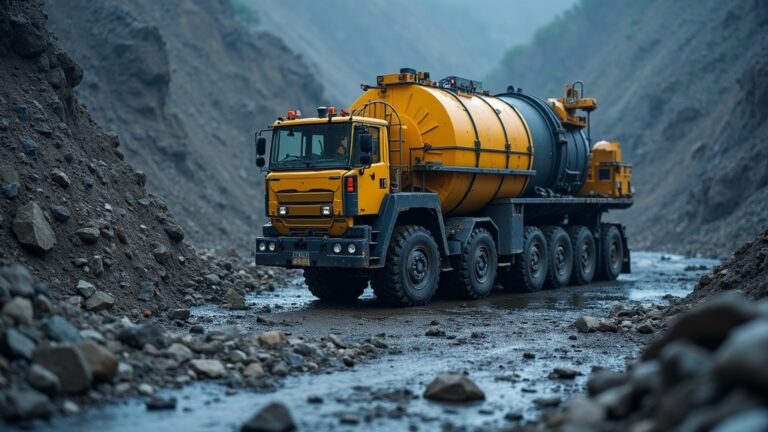
Commercial Grout Mixing in Mining Tunneling and Ground Stabilisation
Commercial grout mixing in mining tunneling and ground stabilisation requires precise equipment and mix designs to ensure structural integrity, water control, and void filling in underground environments. This article covers the key principles, equipment types, mix formulations, and best practices for achieving reliable grouting results in demanding mining and tunneling projects.
Table of Contents
- 1. The Role of Commercial Grout Mixing in Mining and Tunneling
- 2. Equipment and Technology for Grout Mixing
- 3. Mix Design Fundamentals for Ground Stabilisation
- 4. Quality Control and Application Best Practices
- Frequently Asked Questions
- Comparison of Grout Mixing Approaches
- Practical Tips for Grout Mixing Operations
- Final Thoughts on Commercial Grout Mixing in Mining Tunneling and Ground Stabilisation
- Further Reading
Key Takeaway
Commercial grout mixing in mining tunneling and ground stabilisation is the process of blending cement, bentonite, aggregates, and water into a homogenous slurry for sealing, strengthening, and filling underground voids and fractures. Proper equipment selection and mix design are critical for achieving project-specific strength, durability, and flowability targets.
Quick Stats: Commercial Grout Mixing in Mining Tunneling and Ground Stabilisation
- Standard tunnel grouting mixes use 1 part Portland cement to 1 part bentonite with up to 5 parts sand by volume (Public tunnel and shaft grouting specification, 2025)[1]
- Recommended rock bolt anchoring grout delivery pressure is 690 kilopascals to prevent rock mass fracturing (Colloidal Grout Mixer, 2026)[3]
- Grout hole spacing for continuous ground stabilisation around mining drifts is typically 1.5 to 3 meters (Colloidal Grout Mixer, 2026)[4]
- Target compressive strength for economical bulk void-filling grout in mining is 1.0 N/mm² (Colloidal Grout Mixer, 2026)[5]
1. The Role of Commercial Grout Mixing in Mining and Tunneling
Commercial grout mixing in mining tunneling and ground stabilisation is a foundational process that supports safe and efficient underground construction. The primary objective is to produce a uniform slurry that can be pumped into fractures, voids, and between tunnel linings to achieve sealing, strengthening, or filling. As the Epiroc Grouting Solutions Team explains, “Grouting is primarily used for sealing, strengthening or stabilizing, or filling purposes – or a combination of these – in underground mining and tunneling applications” (Epiroc, 2026)[2].
The importance of achieving a consistent mix cannot be overstated. Variations in water-to-cement ratio or inadequate blending can lead to segregation, poor pumpability, or weak final strength, compromising the entire grouting operation. Modern commercial grout mixing equipment addresses these challenges through high-shear mixing technology and precise proportioning controls.
In large-scale tunneling projects such as HS2, bentonite-based grouts are widely adopted. The LKAB Minerals Technical Team notes that “their flowability and sealing capacity allow reliable annulus grouting and effective stabilisation of the surrounding ground conditions around segmental linings” (LKAB Minerals, 2026)[6]. This demonstrates how the choice of materials and mixing method directly impacts project outcomes.
2. Equipment and Technology for Grout Mixing
The equipment used for commercial grout mixing in mining tunneling and ground stabilisation has evolved significantly, with colloidal mixers becoming the industry standard for high-performance applications. Unlike traditional paddle mixers, colloidal mixers use a high-speed rotor-stator mechanism to create intense shear forces that break down agglomerates and produce a stable, homogeneous slurry.
A key advantage of colloidal mixing is the ability to achieve consistent quality even with challenging materials like bentonite and fine cements. The Gaodetec Engineering Department states, “In underground mines, grout mixing equipment is a key piece of equipment used to prepare grouting materials, ensuring solid materials and water are combined in the right proportion to form a uniform slurry” (Gaodetec, 2026)[7]. This equipment typically includes mixing tanks, high-shear pumps, and automated control systems for water and additive metering.
For projects requiring mobility, skid-mounted or trailer-mounted mixing plants are available, allowing the equipment to be moved as the mining face advances. The colloidal grout plants guide provides detailed specifications for selecting the right plant capacity for various underground operations. When choosing equipment, factors such as output rate, mix volume, power supply, and the physical constraints of the underground workspace must all be considered.
Key Components of Commercial Grout Mixing Systems
Modern commercial grout mixing systems consist of several integrated components designed to work together seamlessly. The mixing unit itself is the core, but equally important are the material storage silos, water metering systems, and positive displacement pumps that deliver the grout to the application point. Automated controls allow operators to set mix parameters and monitor consistency in real time, reducing human error and improving repeatability.
For a comprehensive overview of the specific equipment used in these operations, the colloidal grout mixer guide offers detailed technical information on selecting and operating these machines. The guide covers everything from shear rate requirements to maintenance schedules, making it a valuable resource for project engineers and site supervisors alike.
3. Mix Design Fundamentals for Ground Stabilisation
Achieving the correct mix design is essential for successful commercial grout mixing in mining tunneling and ground stabilisation. The Amix Systems Project Design Team emphasises that “a proper grout mix design is about finding the best combination of cement, sand, water, and additives to achieve specific performance goals such as strength, durability, and flowability, especially critical for ground stabilization and water control in mining works” (Amix Systems, 2026)[8].
Standard formulations for tunnel and shaft grouting often use equal volumetric proportions of Portland cement and bentonite, with sand contents up to five parts. Water is added until the mixture reaches the consistency of thick cream, ensuring pumpability and effective penetration into ground fractures (Public tunnel and shaft grouting specification, 2025)[1]. For rock bolt anchoring, the grout must be sufficiently fluid to fill the annular space around the bolt but cohesive enough to prevent washout in water-bearing ground.
For bulk void filling in mining, cost-effective mixes using pulverised fuel ash and gravel can achieve a target compressive strength of 1.0 N/mm² while maintaining structural integrity (Colloidal Grout Mixer, 2026)[5]. The choice of additives, including accelerators, retarders, and plasticisers, allows the mix to be tailored to specific ground conditions and application rates.
4. Quality Control and Application Best Practices
Quality control is paramount in commercial grout mixing in mining tunneling and ground stabilisation. Even the best mix design will fail if the grout is not properly mixed, tested, and applied. The Amix Systems Engineering Group notes that “cementitious grout serves as a fundamental material for structural bonding, void filling, and stabilization in mining and tunneling projects, and its performance is highly dependent on precise mixing technology and controlled application” (Amix Systems, 2026)[9].
Key quality control measures include regular testing of grout density, viscosity, bleed, and compressive strength. On-site testing should be conducted at the start of each shift and whenever material batches change. For rock bolt anchoring, maintaining delivery pressure around 690 kilopascals is recommended to achieve effective encapsulation without fracturing the surrounding rock mass (Colloidal Grout Mixer, 2026)[3]. Drill hole spacing for grout curtains should be between 1.5 and 3 meters to ensure continuous ground stabilisation and water cut-off (Colloidal Grout Mixer, 2026)[4].
Application best practices include pre-wetting the ground to improve penetration, using packers to isolate injection zones, and monitoring injection pressure and volume in real time to detect changes in ground conditions. For more information on material selection and preparation, the colloidal nano silver resource provides additional context on specialised additive applications.
Important Questions About Commercial Grout Mixing in Mining Tunneling and Ground Stabilisation
What is the difference between a colloidal mixer and a paddle mixer for grout?
A colloidal mixer uses a high-speed rotor-stator mechanism to create intense shear forces, breaking down agglomerates and producing a highly stable, homogeneous slurry. This results in better penetration into fine fractures and reduced segregation during pumping. Paddle mixers, while simpler and cheaper, produce a less uniform mix and are generally unsuitable for bentonite-based grouts or applications requiring high flowability. For commercial grout mixing in mining tunneling and ground stabilisation, colloidal mixers are the preferred choice for critical structural and sealing applications.
How do you determine the correct water-to-cement ratio for a grout mix?
The correct water-to-cement ratio is determined by the specific application requirements. For ground stabilisation grouting, the mix should have the consistency of thick cream, which typically corresponds to a water-to-cement ratio between 0.4 and 0.6 by weight. Lower ratios produce higher strength but reduce pumpability, while higher ratios improve flow but weaken the final material. Trial mixes should be tested on site using a flow cone or Marsh funnel to verify that the grout meets the specified viscosity before beginning production. The target parameters of strength, durability, and flowability must all be balanced.
What are the most common additives used in mining and tunneling grout?
The most common additives include bentonite for improved flowability and sealing capacity, accelerators such as calcium chloride to speed up setting time in cold or wet conditions, and retarders like sodium gluconate to delay setting in hot environments or for long pumping distances. Plasticisers or superplasticisers can be added to reduce water demand while maintaining flow, increasing final strength. For bulk void filling, pulverised fuel ash and gravel are added to reduce material cost while maintaining structural integrity. Each additive must be compatible with the cement and other materials in the mix.
How is grout quality tested on site during commercial grout mixing operations?
On-site quality testing involves measuring grout density using a mud balance or specific gravity cup, and viscosity using a Marsh funnel or flow cone. Bleed tests measure the amount of water that separates from the grout over time, which should be minimised. Compressive strength is tested by casting cubes or cylinders and testing them at specified intervals, typically 7 and 28 days. For continuous operations, a sample should be taken from every batch or at least every hour. Real-time monitoring of injection pressure and volume also provides indirect quality assurance by indicating changes in ground conditions or mix consistency.
Comparison of Grout Mixing Approaches
Different commercial grout mixing approaches are suited to different applications in mining and tunneling. The table below compares three common methods based on key performance criteria.
| Mixing Method | Best Application | Mix Quality | Output Rate | Mobility |
|---|---|---|---|---|
| Colloidal Mixer | Bentonite grouts, fine fracture sealing, rock bolting | Very high – homogeneous, stable slurry | Moderate to high | Skid or trailer mounted |
| Paddle Mixer | Bulk void filling, low-viscosity cement grouts | Moderate – prone to segregation | High | Usually stationary |
| Batch Mixer (High-Shear) | Small-volume specialist mixes, testing | High – precise control | Low | Portable |
The choice between these methods depends on project scale, material requirements, and site constraints. For most underground stabilisation and sealing work, colloidal mixing offers the best balance of quality and efficiency.
Practical Tips for Grout Mixing Operations
To achieve consistent results with commercial grout mixing in mining tunneling and ground stabilisation, follow these actionable tips:
- Calibrate water meters daily – Even small variations in water content significantly affect grout properties. Verify meter accuracy against a measured volume each shift.
- Pre-hydrate bentonite – For bentonite-based grouts, allow the bentonite to hydrate in clean water for at least 30 minutes before adding cement. This maximises its swelling and sealing properties.
- Monitor mix temperature – High temperatures accelerate setting time. In hot environments, use chilled water or retarders to maintain workability during pumping.
- Use a sieve on the grout outlet – A simple 1-2 mm mesh sieve catches any unmixed agglomerates that could block injection lines or reduce penetration.
- Document every batch – Record the mix proportions, water temperature, density, and viscosity for each batch. This data is invaluable for troubleshooting and quality assurance.
- Flush lines after each use – Grout left in hoses or pumps can harden and cause blockages. Always flush with clean water immediately after finishing a pour.
For more about Epoxy grout, see find epoxy grout resources.
Final Thoughts on Commercial Grout Mixing in Mining Tunneling and Ground Stabilisation
Successful commercial grout mixing in mining tunneling and ground stabilisation depends on selecting the right equipment, designing the correct mix, and maintaining rigorous quality control throughout the operation. From colloidal mixers that produce stable bentonite slurries to automated plants that manage large-volume void filling, the technology available today allows engineers to tackle even the most challenging underground conditions. By understanding the principles outlined in this article and applying best practices on site, project teams can achieve reliable sealing, strengthening, and stabilisation results. For further guidance on equipment selection and mix design, explore the comprehensive grout in mining overview for detailed technical specifications and case studies.
Further Reading
- 06-SS02990 Tunnel and Shaft Grouting Addendum No.1. Scribd.
https://www.scribd.com/document/754301792/06-SS02990-Tunnel-and-Shaft-Grouting-Addendum-No-1 - Grouting solutions – technical specification. Epiroc.
https://www.epiroc.com/content/dam/epiroc/underground-mining-and-tunneling/infrastructure/infrastructure-technical-specifications/9869_0099_01e_Grouting_solutions_technical_specification_english.pdf - Colloidal Grout Mixer – Grout in Mining Overview.
https://www.colloidalgroutmixer.com/2026/07/19/grout-in-mining-overview/ - Colloidal Grout Mixer – Grout in Mining Overview.
https://www.colloidalgroutmixer.com/2026/07/19/grout-in-mining-overview/ - Colloidal Grout Mixer – Grout in Mining Overview.
https://www.colloidalgroutmixer.com/2026/07/19/grout-in-mining-overview/ - HS2 Tunnelling with Bentonite – Annulus Grouting. LKAB Minerals (YouTube).
https://www.youtube.com/watch?v=maVwOEcFzS8 - Grout Mixing Equipment for Underground Mine. Gaodetec.
https://www.gaodetec.com/engineeringequipment/grout-mixing-equipment-for-underground-mine.html - Grout Mix Design for Mining Projects. Amix Systems.
https://amixsystems.com/grout-mix-design/ - Cementitious Grout – Applications and Technical Overview. Amix Systems.
https://amixsystems.com/cementitious-grout/